

Identifying male vs. female bearded dragons
Determining the sex of your bearded dragon can be surprisingly tricky, especially when they're young. It’s not always a clear-cut answer, and even experienced keepers can sometimes misidentify hatchlings. The primary differences lie in their reproductive anatomy, which manifests in visible ways as they mature. However, these visual cues aren't prominent in babies, leading to a lot of guesswork early on.
The most reliable methods involve looking for the presence of a hemipenal bulge in males and examining the femoral pores on their hind legs. These features develop over time, so patience is key. I remember when I first got my dragon, Darwin, I was convinced he was a female based on his size. It wasn’t until he was nearly a year old that the bulge became undeniably obvious!
It’s important to understand that there's natural variation among individuals. Some males may have a more subtle bulge than others, and some females may exhibit slightly more prominent femoral pores. Sexing isn't an exact science, and relying on a single characteristic can lead to errors. A combination of observations is always best.
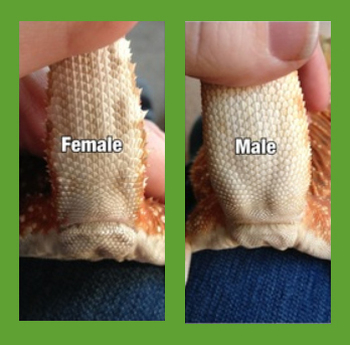
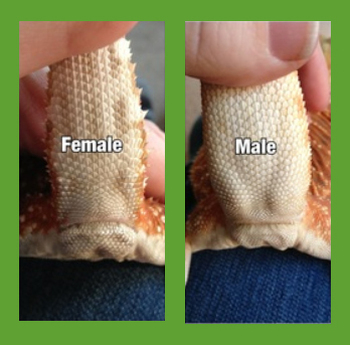
The hemipenal bulge
The hemipenal bulge is arguably the most reliable visual cue for identifying a male bearded dragon. This is formed by the hemipenes, the male reproductive organs, housed within the base of the tail. As the dragon matures, this area will become noticeably swollen compared to the base of the tail in females. It’s usually most visible when the dragon is viewed from the side.
The bulge typically appears around 6-8 months of age, but it can sometimes be detected earlier in faster-growing individuals. It isn’t an instant, dramatic change; it’s a gradual development. The size and prominence of the bulge will continue to increase as the male reaches sexual maturity. Don’t confuse a full stomach with a bulge, though – a recently fed dragon can have a rounded appearance.
It's important to note that some males have a very subtle bulge, making it difficult to detect. Viewing the dragon from different angles and comparing it to images of known male dragons can be helpful. Cold Blood Creations on YouTube has a good video detailing this, though it’s from 2020, so keep that in mind (). Don't feel discouraged if you're unsure; it takes practice and a keen eye.
Sometimes, a female can have a slight swelling due to other factors, but it will never be as defined or consistent as the hemipenal bulge in a male. If you’re still unsure, consider other indicators like femoral pores, or consult with a vet.
Femoral pores
Femoral pores are small pores located on the underside of the hind legs, near the vent. These pores are present in both males and females, but they are significantly more prominent in males. In males, they appear as small, dark spots and become more noticeable as they mature. In females, they are typically much smaller and less visible, often appearing as faint discolorations.
The femoral pores secrete a waxy substance that males use during breeding displays. This is why they are larger and more developed in males. The prominence of these pores isn't a foolproof method, as some females can develop slightly more visible pores than others. However, the absence of prominent femoral pores is a strong indicator of a female.
According to Bearded Dragon Lady, the femoral pores are a useful, though not perfect, indicator of sex. The site notes that they are more developed in males and will be visible as darker spots, while females may have very faint pores (). Remember to look at the overall picture - femoral pores are best used in conjunction with other indicators like the hemipenal bulge.
Tail shape and size
While not a definitive method, tail shape and size can sometimes offer subtle clues about a bearded dragon’s sex. Males generally have thicker tails, especially at the base, due to the presence of the hemipenes. Females tend to have more slender tails that taper more gradually.
However, this difference isn’t always obvious, and it can be easily misinterpreted. A dragon’s weight and overall health can influence tail size. A well-fed dragon will naturally have a thicker tail than a malnourished one. It's also easy to compare a dragon to others online and assume differences, when in reality, there’s a wide range of normal variation.
I've seen plenty of females with relatively thick tails and males with surprisingly slender ones. Don’t rely solely on tail shape to determine sex. It should be considered alongside other indicators, like the hemipenal bulge and femoral pores. Petco also notes that tail width is a subtle clue, but shouldn’t be used as the sole indicator ().
Behavioral differences
The question of whether there are consistent behavioral differences between male and female bearded dragons is a common one. The answer, unfortunately, is not really. While some keepers report anecdotal differences – such as males being more prone to head-bobbing or females being more docile – these observations are not scientifically proven.
There’s a lot of individual personality variation within the species, making it difficult to attribute specific behaviors to sex. A dragon’s upbringing, environment, and individual temperament will have a much greater impact on its behavior than its sex. Trying to sex a dragon based on its behavior is unreliable and can lead to misidentification.
I’ve personally kept both male and female dragons that exhibit a wide range of behaviors. Some males are very laid-back, while some females are quite assertive. Don’t fall for the trap of assuming a dragon’s sex based on how it acts.
Sexing young dragons
Sexing baby or juvenile bearded dragons is notoriously difficult, and often inaccurate. The hemipenal bulge and femoral pores simply aren’t developed enough to provide reliable visual cues. In very young dragons, these features are either absent or too small to distinguish clearly. This is why it’s best to wait until your dragon is at least 6-8 months old before attempting to determine its sex.
Trying to sex a young dragon too early can lead to misidentification and unnecessary stress for the animal. The developing reproductive organs are still forming, and any observations made at this stage are likely to be inaccurate. Patience is key. It's far better to wait and be sure than to guess and be wrong.
Here’s a quick checklist to keep in mind when waiting for visual cues to develop:
* Age: Wait until at least 6-8 months old.
* Regular Observation: Regularly check for the hemipenal bulge and femoral pores.
* Avoid Pressure: Don’t attempt to manually examine the dragon’s reproductive area.
- Age: Wait until at least 6-8 months old.
- Regular Observation: Regularly check for the hemipenal bulge and femoral pores.
- Avoid Pressure: Don’t attempt to manually examine the dragon’s reproductive area.
Professional sexing
Sometimes, despite your best efforts, you just can’t confidently determine your dragon’s sex. In these cases, it’s best to seek the opinion of a professional. A veterinarian with experience in reptile medicine or an experienced reptile breeder can often accurately sex your dragon.
Vets may use a technique called probing, which involves gently inserting a small probe into the cloaca to detect the presence of hemipenes. This should only be performed by a qualified professional, as improper probing can cause injury. Experienced breeders often rely on their knowledge of anatomy and visual cues to make an accurate assessment.
I had a vet sex one of my rescues, and they were able to confirm the sex with certainty using probing. It was a quick and painless procedure, and it gave me peace of mind. However, it’s important to find a vet who is comfortable and experienced with reptiles. While more invasive, it's the most accurate method.
Essential Gear for Your Bearded Dragon's Habitat

Designed for Exo Terra terrariums · Provides secure access for maintenance · White and black color options
This terrarium door ensures a secure and accessible enclosure, crucial for maintaining a stable environment for your bearded dragon.

Includes an 18-inch fluorescent bulb · Slimline design for terrariums · Suitable for desert habitats
This light fixture provides essential lighting for your bearded dragon's habitat, supporting their natural behaviors and well-being.

10.0 UVB output · 15 Watt power · 12-inch length
The ReptiSun 10.0 UVB lamp is vital for bearded dragons to synthesize Vitamin D3, essential for calcium absorption and bone health.

Monitors temperature and humidity · Bluetooth connectivity with app control · Remote monitoring up to 164ft
Accurate monitoring of temperature and humidity is critical for a bearded dragon's health, and this device offers convenient remote tracking.

Phosphorous-free calcium supplement · Includes Vitamin D3 · Ultrafine powder for easy dusting
This calcium supplement with Vitamin D3 is essential for preventing metabolic bone disease in bearded dragons, supporting their skeletal health.
As an Amazon Associate I earn from qualifying purchases. Prices may vary.
No comments yet. Be the first to share your thoughts!