
Start with the right tank size
A bearded dragon’s enclosure is its entire world, so space dictates its physical development and mental well-being. Cramping a dragon into a tank meant for a smaller species or a younger life stage leads to stunted growth, obesity, and chronic stress. Always plan for the adult size, not the current size.
For hatchlings and juveniles, a 20-gallon long tank (approximately 30 inches long) provides enough room for thermoregulation and exercise. This size is manageable for beginners while still allowing the young dragon to move freely. As they grow, they will quickly outgrow this space. By six months, you should transition them to a larger enclosure to prevent the skeletal deformities associated with confinement.
Adult bearded dragons require a minimum of a 4x2x2 foot enclosure (40 gallons or more). This footprint allows them to stretch out fully and create a proper temperature gradient from the basking spot to the cool side. Glass tanks are often recommended because they retain heat and humidity effectively, making it easier to maintain the stable environment these reptiles need to thrive.
Set up heat and UVB lighting
Bearded dragons rely on external heat sources to regulate their body temperature and process food. Without a proper thermal gradient, they cannot digest meals efficiently or maintain a healthy immune system. The enclosure must allow the dragon to move between a warm basking zone and a cooler area to thermoregulate.
UVB light is equally critical. It enables the synthesis of vitamin D3, which is necessary for calcium absorption. Without adequate UVB exposure, bearded dragons develop metabolic bone disease, a painful and often fatal condition. The lighting setup must cover the entire enclosure to ensure the dragon receives exposure regardless of where it rests.
Mount a ceramic heat emitter or a basking bulb on one end of the enclosure. This creates the hottest spot, typically reaching 95–110°F (35–43°C). Ensure the lamp is securely fastened and positioned so the dragon cannot touch it, preventing burns.
Install a linear T5 HO UVB tube across the top of the cage, spanning most of the enclosure's length. Place it directly above the basking area or adjacent to it. Most bulbs need to be within 10–12 inches of the dragon’s skin to be effective. Avoid glass or plastic covers that block UV rays.
Place digital thermometers at both the hot and cold ends of the enclosure. Check the basking spot temperature at the surface where the dragon rests. Adjust the lamp height if the temperature is too high or too low. Monitor these readings daily to ensure stability.
Use a smart plug or timer to automate the lighting schedule. Provide 10–12 hours of light per day, mimicking natural seasonal changes. Turn off all lights at night; do not use red or blue "night" bulbs, as they disrupt sleep cycles and can cause stress.
Regular maintenance is essential for this setup. UVB bulbs lose their potency over time even if they still emit visible light. Replace linear T5 HO bulbs every six to twelve months. Clean the glass or acrylic cover of the fixture monthly to remove dust and calcium deposits that block UV transmission.
Feed insects and greens daily
Bearded dragons are omnivores, but their nutritional needs shift dramatically as they age. Juveniles require a protein-heavy diet to support rapid growth, while adults transition toward a herbivore-heavy lifestyle. Understanding this balance prevents metabolic bone disease and obesity.
The Dietary Shift: Juveniles vs. Adults
Young bearded dragons (under 6 months) are essentially carnivores. Their diet should consist of 80% insects and only 20% greens. Feed them small, gut-loaded insects like crickets, dubia roaches, and black soldier fly larvae multiple times a day. As they approach adulthood, gradually reduce insect frequency and increase the variety of vegetables.
Adult bearded dragons (6 months and older) are primarily herbivores. Their diet should flip to 80% dark leafy greens and vegetables, with only 20% insects. Offer a salad of romaine lettuce, collard greens, kale, and dandelion greens daily. Insects should be offered 2-3 times a week as a supplement, not a staple.
Safe Foods and Feeding Routine
Provide a varied mix of greens to ensure nutrient diversity. Safe options include collard greens, mustard greens, turnip greens, and squash. Avoid iceberg lettuce, which has little nutritional value. Dust insects with calcium powder (without D3 if your UVB light is proper) twice a week for adults, and daily for juveniles. Offer fresh, clean water daily, either in a shallow dish or by misting their enclosure.
Daily Feeding Checklist
-
Dust insects with calcium powder before offering.
-
Prepare a fresh salad of dark leafy greens.
-
Provide clean, fresh water.
-
Remove uneaten insects to prevent biting.
Spot clean and maintain humidity
Daily maintenance prevents bacterial growth and keeps your bearded dragon healthy. Start with spot cleaning the enclosure every morning. Remove any soiled substrate, uneaten insects, or feces. This simple step stops bacteria from multiplying and keeps the habitat sanitary.
Next, check the water bowl. Refill it with fresh, dechlorinated water and scrub away any slime or debris. Bearded dragons often defecate in their water, so this step is critical for hygiene.
While cleaning, monitor humidity levels. Bearded dragons originate from arid environments and do not need high humidity. Aim for 30-40% during the day. Only increase humidity to 40-60% during shedding periods to help them shed their skin properly.
To support this, provide a humid hide. This small, enclosed space with a damp substrate patch helps with shedding and hydration without raising the humidity of the entire enclosure. Check this hide daily to ensure the substrate is moist but not soaking wet.
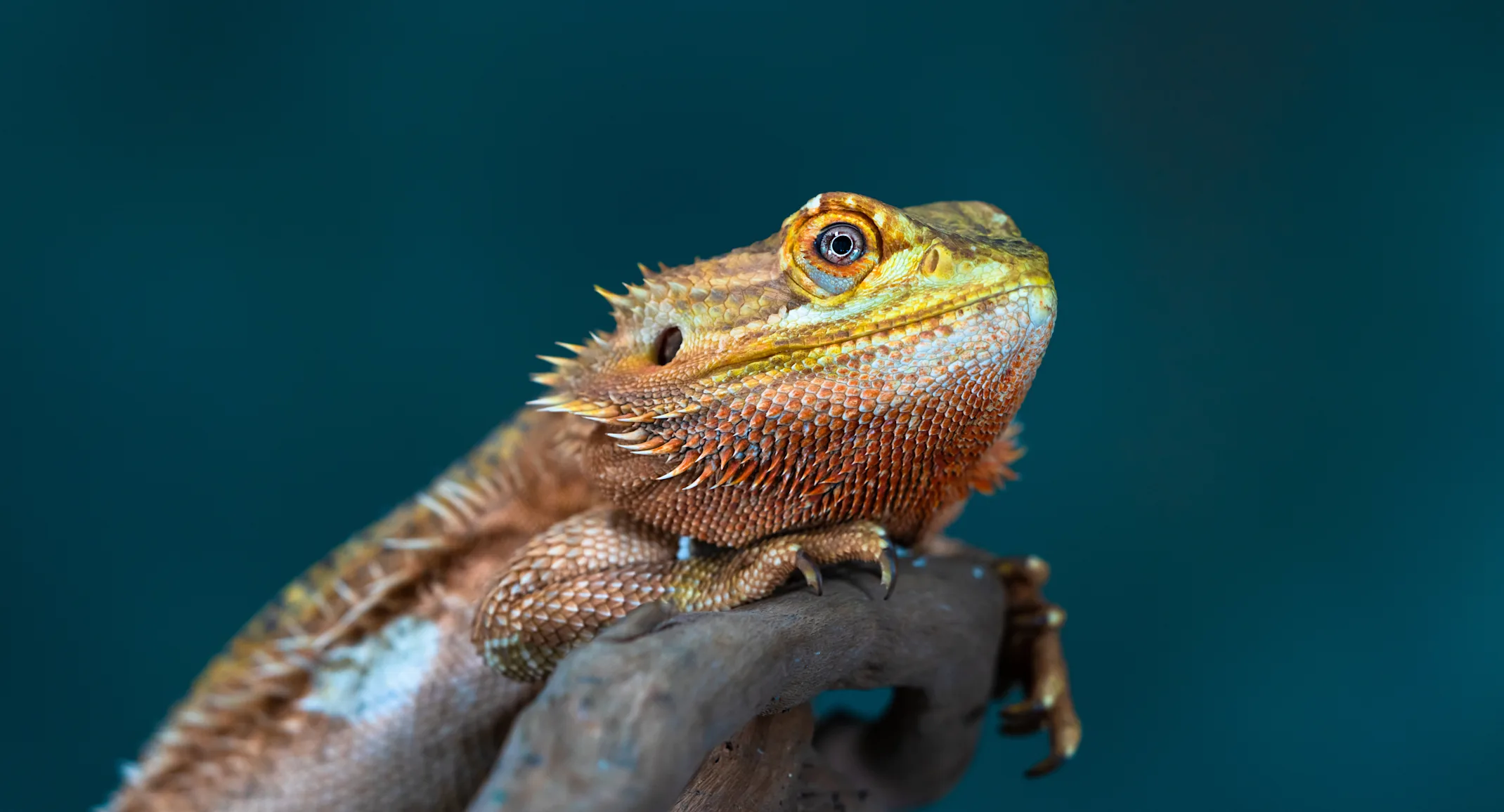
Watch for signs of poor health
Your bearded dragon’s behavior and physical appearance are its primary communication tools. Because reptiles are masters at hiding illness to avoid predation, by the time symptoms are obvious, the underlying issue is often advanced. Regular observation during feeding and handling allows you to catch deviations from normal behavior early.
Look for specific indicators that signal common health crises. Metabolic bone disease (MBD) often presents as a swollen jaw, deformed limbs, or a soft shell. Respiratory infections are characterized by wheezing, mouth breathing, or bubbles around the nose. Impaction, a life-threatening blockage, shows up as straining to defecate, a distended belly, or complete lack of bowel movements.
A lethargic dragon that refuses food or hides constantly is a major red flag. Weight loss, even if subtle, combined with a dull or darkening skin color indicates the animal is struggling to process nutrients or regulate temperature.
Keep a simple log of daily eating habits, defecation frequency, and activity levels. This baseline makes it easier to spot anomalies. Do not wait for a crisis to schedule a check-up; a proactive annual exam can identify hidden issues before they become emergencies.
Frequently asked: what to check next
New bearded dragon owners often worry about longevity, social interaction, and what treats are safe. These answers address the most common concerns to help you feel confident in your care routine.
No comments yet. Be the first to share your thoughts!