

Start with the tail base
The most reliable way to identify bearded dragon gender in adults is to examine the hemipenal bulges located at the base of the tail. These structures are part of the male reproductive system and appear as two distinct, shadowed bumps on either side of the tail's base. In females, these bulges are absent, leaving the tail base smooth and uniform.
To perform this check, gently lift the dragon's tail to expose the underside. Look for two clear, raised areas flanking the central vent. If you see two distinct bulges, the dragon is male. If the area is flat with only a single central indentation, it is likely female. This physical marker is consistent across most adult bearded dragons and provides a clear visual distinction without requiring invasive procedures.
Support the dragon's body with one hand while using the other to slowly lift the tail. Ensure the movement is smooth to avoid stressing the animal. The goal is to expose the vent and the base of the tail for clear viewing.

Examine the underside of the tail base. Look for two distinct, shadowed bumps on either side of the vent. These are the hemipenal bulges characteristic of male bearded dragons.
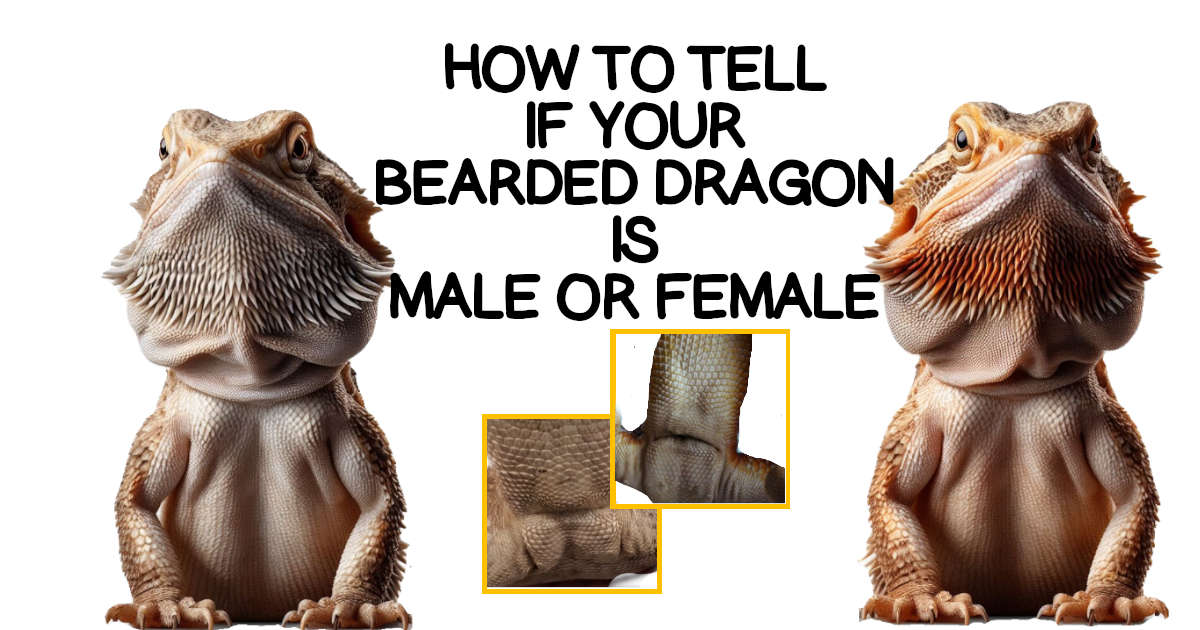
In males, the bulges create a slight indentation or 'dent' in the center of the tail base. Females lack these bulges, so their tail base appears smooth and continuous without any central depression.
Check the ventral spines
To confirm a bearded dragon’s gender, flip the animal gently onto its back and support its body with one hand. Use your other hand to lift the tail slightly, exposing the ventral (underside) surface. This view reveals the femoral pores and hemipenal bulges, which are the most reliable physical markers for sexing.
Look at the base of the tail on both sides of the vent. Male bearded dragons have two distinct, dark bulges located just behind the hind legs. These are the hemipenal bulges, which house the reproductive organs. Females lack these bulges entirely or have only a single, small bump in the center of the vent area. The rest of the tail base in females appears smooth and uniform.
Next, examine the row of pores along the inside of each hind leg. In males, these femoral pores are large, dark, and clearly visible, often appearing as a row of black dots. In females, these pores are much smaller, lighter in color, and often barely visible to the naked eye. If you need to see them more clearly, shine a flashlight along the leg to highlight the texture difference.
Support the dragon’s body on your palm while gently lifting its tail to expose the ventral side. Ensure the animal is calm and secure to avoid stress or injury.
Inspect the base of the tail on both sides of the vent. Look for two distinct, shadowed bulges in males. Females will have only a single, small central bump or none at all.
Check the inside of each hind leg for a row of pores. Male pores are large, dark, and prominent. Female pores are small, faint, and often difficult to see without a light.
-
Support the dragon securely on your palm
-
Lift the tail to expose the ventral surface
-
Check for two hemipenal bulges at the tail base
-
Inspect hind leg femoral pores for size and darkness
Look for the preanal pores
Turn your attention to the underside of the tail, just below the vent. This area contains a row of small, visible bumps known as preanal pores. These structures produce waxy secretions used for scent marking and are the most reliable physical indicator for sexing adult bearded dragons.
In male bearded dragons, these pores are large, distinct, and arranged in a clear V-shape pointing toward the vent. You will often see two additional bulges on either side of the tail base, known as femoral pores, which are also more prominent in males. The pores themselves may appear as dark, open dots that are easily visible to the naked eye.
Female preanal pores are much smaller, less defined, and lack the sharp V-shape. They often look like tiny, scattered bumps rather than distinct, organized pores. If you do not see a clear V-shape or prominent bulges, the dragon is likely female.
Use the flashlight trick
The flashlight method, known technically as transillumination, is one of the fastest and most non-invasive ways to confirm your bearded dragon's gender. It works best on dragons aged 8 to 12 weeks, when their bodies are small enough for light to pass through clearly. This technique allows you to see internal structures without handling the dragon for an extended period, which is ideal for hesitant owners or shy pets.
To perform this check, you will need a bright light source. A smartphone flashlight works perfectly fine, provided it is focused and not overly diffuse. Position your dragon on a dark surface to maximize contrast. Gently place the light source against the top of the tail, near the base where it meets the body. Do not shine the light directly into the dragon's eyes or hold it in one spot for too long to avoid discomfort.
When the light passes through the tail, you will see shadows cast by the internal hemipenal bulges. Male bearded dragons have two distinct, rounded bulges on either side of the tail base. These appear as two clear, dark shadows against the glowing tissue. Female bearded dragons lack these structures, so the light will pass through more evenly, showing a uniform glow without distinct lateral bulges.
Watch for behavioral signs
Physical traits provide the baseline for sexing, but behavior often confirms the result. Male bearded dragons display distinct dominance and courtship rituals that females rarely replicate. Observe the dragon in its enclosure during feeding or when you approach the glass.
Head bobbing is the primary indicator. A male performs slow, deliberate bobs to assert territory or courtship interest. Females may bob quickly as a submissive signal, but the slow, rhythmic motion is almost exclusive to males. Watch for this pattern during active hours.
Arm waving occurs when a dragon lifts one forelimb and moves it in a circular motion. Males wave to signal submission to a perceived rival or to attract a mate. Females generally do not wave unless they are stressed or threatened. Consistent waving during routine interactions strongly suggests a male.
Tail thumping involves the dragon slapping its tail against the substrate. This is a defensive or aggressive display. While both sexes can thump their tails when frightened, males do so more frequently and with greater force. Use these behaviors alongside physical checks for accurate identification.
Common sexing mistakes
Even experienced keepers misidentify bearded dragons when they rely on a single visual cue. The most frequent error is mistaking fat deposits for hemipenal bulges. Fat accumulates along the tail base in both sexes, especially in well-fed individuals, creating a soft, uniform swelling that lacks the distinct, shadowed edges of male reproductive organs. A female with a full belly can easily mimic the appearance of a male with two bulges if you do not check for the central indentation that defines the female anatomy.
Another common mistake involves handling pressure. Never squeeze the tail base hard to force the bulges into view. This causes stress to the animal and can lead to injury or internal damage. Instead, gently stroke the vent area while the dragon is relaxed. If the dragon is tense, its muscles will contract, masking the natural shape of the tail base. Wait for the dragon to settle before re-examining the area.
Finally, avoid relying solely on tail thickness. While males often have slightly thicker tails at the base, this trait varies significantly by individual and age. A large female may have a thicker tail than a small male. Always combine the tail base check with other indicators, such as the presence of pre-anal pores or femoral pores, to confirm your assessment. A single feature is rarely enough for a definitive ID.
Essential care supplies
Accurate gender identification requires specific tools to handle the dragon safely and view anatomical details clearly. Avoid using bare hands for extended periods, as reptiles can become stressed or slippery. Instead, use a soft, textured towel to gently restrain the dragon during the inspection process. This provides stability for you and comfort for the animal.
A bright, focused light source is critical for the tail-base examination. A standard smartphone flashlight works well to illuminate the hemipenal bulges. Hold the light against the tail base and look for the characteristic shadow patterns. Males typically display two distinct dark bulges on either side of the tail base, while females show a single central bump or a smooth taper.



As an Amazon Associate, we may earn from qualifying purchases.
For more precise measurements, especially with younger dragons, a digital caliper can help track growth rates, which often differ between sexes. Females generally grow faster initially, but males develop thicker tails and larger head scales as they mature. Keep these supplies ready before your first check to ensure a calm and accurate assessment.
No comments yet. Be the first to share your thoughts!